
An invitation has a material form
A table is a remarkably direct piece of social infrastructure. People can understand what it offers without learning the language of a strategy document. There is food, somewhere to sit and a reason to stay. Yet a table does not invite anyone by itself. Someone chooses the time, sets the price, opens the door and notices the person hovering at the edge of the room. Hospitality gives a social intention a practical form. Its effectiveness depends on a series of decisions that can make a gathering generous, awkward, exclusionary or simply impossible to sustain.
Consider an illustrative neighbourhood supper intended to connect people who would not otherwise meet. The visible product is a meal. The underlying arrangement includes an affordable room, a kitchen, people able to prepare food, money for ingredients, a host and a way for newcomers to find out that they are welcome. Each element can become the limiting factor. A project may possess a kitchen but lack the recurrent resources to use it. It may attract regulars while becoming difficult for anyone new to enter. The social purpose lives in how those conditions are managed.
What social connection means
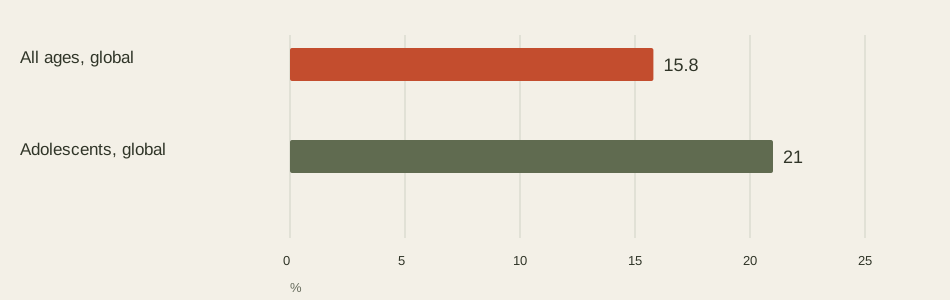
The World Health Organization distinguishes the objective condition of having few relationships or interactions from the subjective experience of loneliness. Its account of connection includes the structure of relationships, the support they provide and their quality. Its 2025 commission reporting estimated that 15.8% of people globally experienced loneliness; adolescents had a higher estimated prevalence of 21%. These are population estimates across different settings, not a diagnosis of everyone who eats alone or an evaluation of community dining. They establish the scale and complexity of a wider issue. 1
This distinction matters for hospitality. A busy room can contain many lonely people. Someone with a small circle of relationships may feel well supported. A programme that records attendance has measured an opportunity for contact, rather than demonstrated a change in belonging. The ambition should remain specific enough to observe: perhaps people recognise others, feel comfortable returning or find someone from whom they can ask for help. These are possible signs of a relationship taking shape. They need to be explored with participants, without turning an ordinary meal into a compulsory assessment of their inner lives.
View the underlying data
| Category | % |
|---|---|
| All ages, global | 15.8 |
| Adolescents, global | 21 |
There is evidence for eating together—and limits to it
In a 2017 study using a UK national stratified survey, Robin Dunbar examined social eating and reported associations with measures including happiness, trust, community engagement and supportive friendships. The paper is a useful indication that meals can be part of how relationships are maintained. Its survey design does not establish that any new meal programme will produce those results, or that one format will suit all participants. A local project still needs to understand the people involved and evaluate its own assumptions. The research offers a reason to take the setting seriously, rather than a licence to promise a cure. 2
The invitation also has to accommodate different ways of being together. Some people enjoy a large shared table and a lively introduction. Others need a quieter edge, a familiar companion or the ability to leave without explanation. Religious practice, allergies, dietary requirements, sensory preferences and cultural expectations influence the experience of a meal. A single format can never be universally comfortable. Good hospitality involves a capacity to notice and respond, with clear limits about what a particular kitchen and team can safely provide. Care becomes credible when the practical offer matches the promise.
Design for the second visit
Public programmes often put substantial effort into first attendance: a launch, a campaign, a strong turnout and photographs of a full room. Relationships usually require a different kind of achievement. The important question becomes whether someone can return, recognise the format and gradually find a role within it. A predictable rhythm reduces the effort of participation. A familiar host can make arrival less demanding. A clear invitation can spare newcomers the feeling that they are intruding on a private gathering whose rules everyone else already understands.
This makes continuity a design consideration from the beginning. If a grant funds three impressive events but leaves no capacity for a smaller recurring gathering, its social legacy may be limited. Conversely, endless repetition can conceal a format that no longer serves the people it was intended to reach. A useful operating rhythm combines reliability with attention: enough consistency for trust to develop, and enough authority to adjust the time, menu, invitation or room arrangement in response to experience. Participants should have ways to contribute to those adjustments that do not require joining a committee.
Welcome has a cost
Every generous gathering has an economic arrangement, even when no money changes hands at the table. Someone has paid for the ingredients, the electricity, the room and the time. Voluntary effort is a contribution with value, rather than evidence that an activity has no cost. A project that relies on a few people continuously absorbing the difference between its promise and its resources is making a fragile bargain. Its financial vulnerability can become a social vulnerability when the host becomes exhausted or the gathering stops without enough notice for the people who depend on it.
There are several possible arrangements: a modest price, cross-subsidy from commercial hospitality, philanthropic support, public commissioning, membership or a combination. Each changes the conditions of participation and the responsibilities of the organiser. A paying customer may expect a different service from someone contributing to a shared meal. A funded programme may carry reporting requirements and a defined group of beneficiaries. Clarity helps protect the welcome. People should understand the offer, and the people delivering it should understand what resources they can rely on. The financial model belongs inside the social design.
A meal belongs to a neighbourhood
Hospitality also depends on the setting around it. A venue reached only by an expensive journey, a room with an intimidating entrance or a programme running when care responsibilities peak will be easier for some people to use than others. UN-Habitat’s public-space work treats access, local policy and ongoing management as connected matters. A privately operated café or a booked community meal is not identical to open public space; applying this attention to access is an extension of the principle. It invites organisers to examine the route into the gathering as carefully as the activity inside it. 3
For an institution, this suggests looking across its resources before inventing another isolated programme. A school, faith organisation, business or cultural venue may already have a kitchen, transport connections, trusted relationships or periods when a room is available. The useful question is how these can support a dependable offer with clear responsibility. Sharing an asset does not remove the need for insurance, competent food handling, maintenance or agreement about who is in charge. It makes those responsibilities part of the partnership to be designed. The opportunity is a better arrangement of existing capacity, with realistic provision for the work it creates.
From goodwill to a practice of belonging
A proportionate evaluation can begin with practical questions. Who comes, who returns and who seems to find the threshold difficult? Are the stated access arrangements actually working? Do participants have ways to influence the gathering? Can the organiser sustain the current frequency without depending on hidden labour? Attendance, participant observations and operational records can each contribute part of the picture. They should be handled respectfully and interpreted together. A larger turnout is not automatically a better gathering, especially if growth removes the attention that made people feel able to participate.
The wider possibility is straightforward and demanding: make hospitality a reliable practice rather than an occasional display of goodwill. This is a useful way to think about the ambition behind initiatives such as Peace Kitchen, without presuming evidence about any particular programme’s results. A place at the table requires a room, a meal, a welcome and an arrangement that allows them to continue. When those elements fit together, a large idea about social life becomes an ordinary experience people can choose to have again. That ordinary repeatability is where much of its value lies.
Sources & notes
Research checked 30 October 2026. This is an analytical essay. Illustrative situations are identified in the text; charts state their scope and limits.
- Social connection: questions and answers ↗World Health Organization · 2025
- Breaking Bread: the Functions of Social Eating ↗R. I. M. Dunbar / Adaptive Human Behavior and Physiology · 2017
- Global Public Space Toolkit: From Global Principles to Local Policies and Practice ↗UN-Habitat · 2015